📺 TCL C7K vs LG & Samsung (2026): Best Choice for Your Living Room
Overview
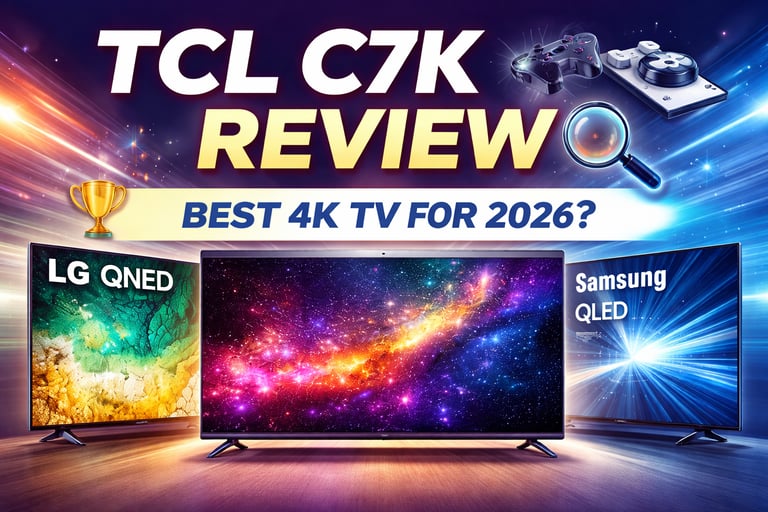
In 2026, the TV market is packed with advanced display technology — from Mini LED and QLED to OLED and AI‑powered picture processing. One of the standout value picks this year is the TCL C7K Premium QD‑Mini LED TV, which delivers premium‑grade performance at a mid‑range price. But how does it compare to the similarly configured models from LG and Samsung? Let’s break it down.
🏆 Product Highlights
🔥 Mid‑Range Champion
TCL C7K Premium QD‑Mini LED TV
This TCL model is one of the most talked‑about TVs in 2026 thanks to its:
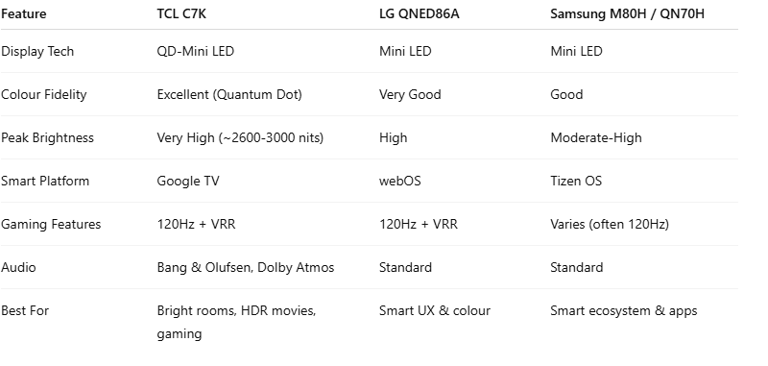
QD‑Mini LED display — combining quantum dot colour enhancement with Mini LED backlighting for bright, vibrant colours and deep contrast.
AiPQ Pro Processor for intelligent picture optimisation and HDR performance.
High peak brightness (up to ~2600‑3000 nits on larger models), which combats glare and improves HDR effects.
Google TV & Chromecast built‑in for broad streaming app access and smart home compatibility.
120Hz native refresh rate with VRR and FreeSync Premium for smoother gaming and fast motion.
Premium audio tuned with Bang & Olufsen and Dolby Atmos support.
This combination makes the C7K a strong all‑around choice for watching movies, sports, gaming, and everyday streaming content.
🆚 Comparable Competitors
⭐ LG Mid‑Range Pick
LG QNED86A evo AI 4K UHD Smart Mini LED TV
LG’s QNED86A is a sizeable competitor to the C7K, offering:
Mini LED backlighting with AI picture optimisation
Dolby Vision support and wide colour coverage
120Hz refresh rate and gaming features
WebOS smart platform, known for intuitive navigation and smart home integration
Compared with TCL’s C7K:
LG’s energy efficiency is slightly better.
The colour and motion processing are refined.
However, the audio system is often less impressive than C7K’s Bang & Olufsen‑enhanced sound.
Who it’s best for: Homeowners who prioritise smart platform usability and energy‑efficient performance.
📶 Samsung Alternative
Since Samsung’s mid‑range Neo QLED / Mini LED lineup is evolving in 2026, a comparable option to the TCL C7K is typically the Samsung M80H or QN70H series, even though these models shift slightly in tech focus.
Samsung TVs usually boast:
Tizen OS and Gaming Hub for integrated streaming and cloud gaming
Strong motion handling and upscaling with Samsung’s AI engine
Good HDR10+ performance
However, Samsung’s newer mini‑LED models sometimes drop QLED quantum dots in favour of basic Mini LED backlighting, which can affect colour performance compared to TCL’s QD‑Mini LED.
Who it’s best for: Users who prefer Samsung’s smart platform or gaming ecosystem, even if it means sacrificing a touch of colour vibrancy.
📊 Side‑by‑Side Comparison (65‑inch models)
📈 Real‑World Performance Notes
✅ Picture quality: TCL’s QD‑Mini LED excels in vivid colours, strong contrast, and bright HDR scenes — ideal for daylight viewing.
✅ Gaming: With 120Hz, VRR, FreeSync support, and low input lag, the C7K competes strongly with gaming‑oriented LG and Samsung TVs.
❗ Viewing angles: Some Mini LED models (including TCL) may show reduced colour accuracy off‑centre compared to OLED screens.
⚠️ Smart interface bloat: TCL’s Google TV sometimes shows ads in recommendations — this can be turned off, but it’s worth noting. User reports suggest occasional streaming app freezes on some units — a known Google TV ecosystem issue rather than a hardware flaw.
✅ Verdict: Which Should You Buy?
🔹 Best Value Overall:
TCL C7K — great picture quality, high brightness, robust gaming features, premium audio, and broad app support make it an excellent mid‑range all‑rounder.
🔹 Best Smart Experience:
LG QNED86A — webOS is smooth and customisable, ideal if that’s your priority.
🔹 Best Ecosystem Integration:
Samsung (M80H / QN70H) — if you’re already in the Samsung smart home ecosystem, it’s a natural fit.
🧠 Final Recommendation (For 2026)
If you want the best balance of performance, colour, brightness, gaming readiness, and price, the TCL C7K Premium QD‑Mini LED TV is arguably the most economical and versatile choice in its class in 2026, especially for entertainment, sports, and HDR media consumption.